Accelerate model readiness with our AI-powered Data Training as a Service leveraging pretrained labels and human oversight to deliver scalable, accurate, and cost-efficient training data.
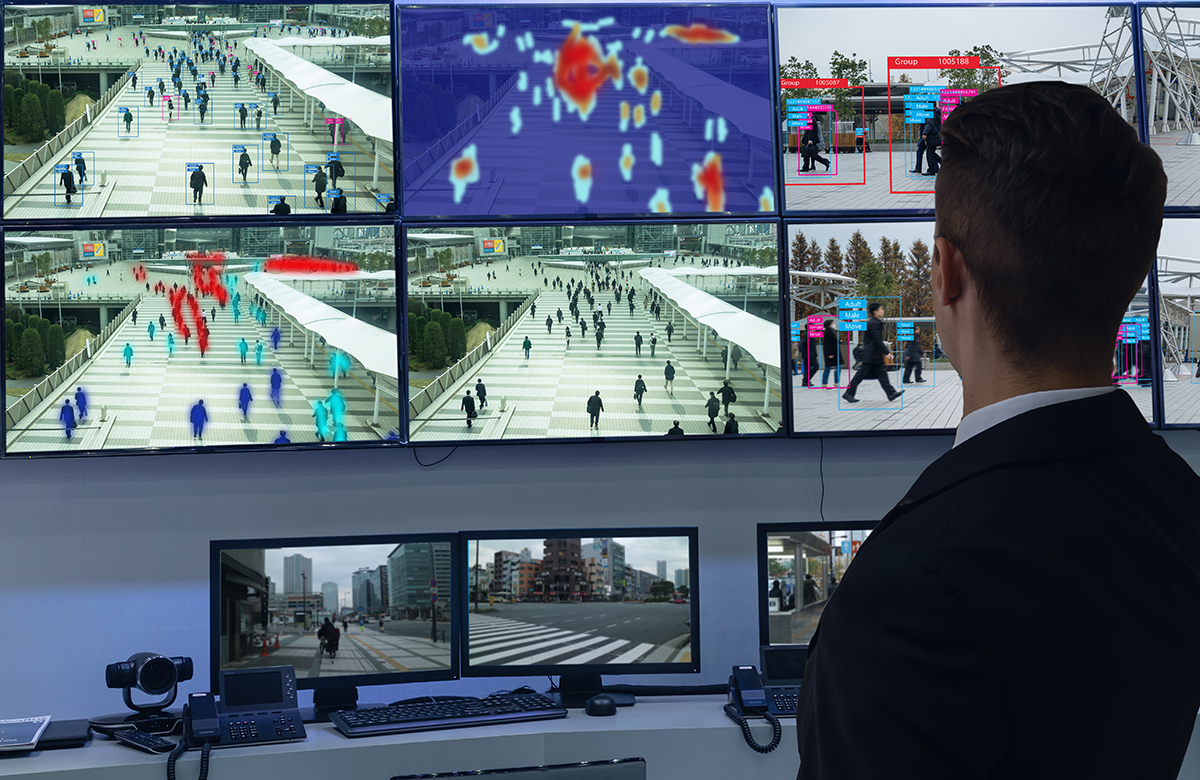
The Complexity of Scaling Accurate Data Training as a Service
Video datasets are large, noisy, and expensive to label. Frame-by-frame complexity, occlusion, lighting changes and multi-camera setups multiply annotation effort and introduce inconsistency across annotators. Domain taxonomies and regulatory constraints for medical, automotive and security use cases add more review overhead and slow delivery.
Without rigorous labeling standards, interpolation, automated assistance and multilayer QA, models suffer from poor generalization, safety gaps and long retraining cycles, slowing agentic AI deployment, eroding stakeholder confidence and increasing time-to-market and operational cost.

Precision Labeling, Powered by Human Expertise and Automation
We combine human expertise, model-in-the-loop automation and domain-aware toolchains to deliver frame-accurate Data Training as a Service at scale. Our teams select the right techniques for the task — bounding boxes, polygons, semantic & instance segmentation, keypoints, cuboids and skeletal markup — and tune labeling granularity to the model objective and edge-case scenarios.
Quality is enforced through multilayer QA, consensus labeling, interpolation acceleration and continuous feedback loops that fold model predictions back into the pipeline. We deliver ready-to-use datasets (COCO/TFRecord/other exports), validation reports and metadata to help engineering teams train, evaluate and iterate faster.
Comprehensive Data Training Solutions

Fast, reliable detection labels for object detection and tracking use cases.

Pixel-level masks to train models requiring precise shape/occlusion handling.

Per-pixel environmental context and linear feature labeling for AV and mapping applications.

Pose and landmark labels for sports analytics, driver monitoring and human-behavior models.

3D spatial labels for depth-aware perception and robotics.

Tailored taxonomies, export formats (COCO, PascalVOC, TFRecord, custom), and compliance-ready datasets for regulated domains.
Generative/Model-in-the-loop tooling. Rapid pilot and deployment playbooks that combine automation with human validation to speed time-to-value for GenAI and agentic systems.
Visual analytics and tooling for video pipelines. Fast inspection, labeling support and analytics to accelerate dataset QA and insights.
Standardized taxonomies, multilayer QA, consensus labeling and traceable validation reports to ensure reproducibility and regulatory readiness.
Industry Use Cases: Tailored Data Training Solutions
Our video annotation solutions accelerate AI adoption by delivering precise, compliant and domain-specific insights that drive measurable impact.

Automotive & Manufacturing
- In-Cabin Driver Monitoring: Annotating posture, facial expressions, and eye movements to detect drowsiness or distraction.
- Road & Lane Annotation: Line annotation for lanes, roads, and traffic boundaries in autonomous driving.
- Object & Shape Annotation: Bitmask and instance segmentation for vehicles, pedestrians, and environmental hazards.
- Drone & Field Monitoring: Identifying assets and risks in drone footage for disaster recovery and safety management.

Healthcare
- Medical Imagery Annotation: Labeling tumors, lesions, organs, and skeletal structures in video scans to support diagnostics, treatment planning, and AI-driven clinical workflows.
- Skeletal Video Annotation: Frame-by-frame motion tracking for rehabilitation, sports medicine, and biomechanics research.

Life Sciences
- Semantic Segmentation: Pixel-level classification of cells, tissues, and lab environments for drug discovery and precision research.
- Instance Segmentation: Identifying multiple biological samples or experimental objects for granular data analysis.

Financial Services
- Security AI: Annotating CCTV or transaction-related footage to train AI systems that detect suspicious behaviors in branches or ATMs.
- Behavioral Analysis: Tracking posture, gestures, and movements for anomaly detection in secured financial environments.

High Tech
- Robotics Annotation: Training robotic arms or drones with labeled movement restrictions and navigation paths in complex environments.
- Keypoint & Line Annotation: Detecting product features, wiring, or circuits for electronics and IoT quality control.

Retail
- Inventory Management: Semantic segmentation to monitor stock levels and product placement in warehouses or stores.
- Product Feature Annotation: Identifying and marking product attributes in retail footage to power smart checkout or shelf analytics.
Why Apexon for Data Training

Proven experience executing multi-million-frame labeling programs for automotive and other industries with consistent quality.

Cross-functional annotators and SMEs (automotive, medical, security) who understand taxonomies, edge cases and compliance requirements.

Deliverables in developer-ready formats (COCO, TFRecord, custom schemas) with metadata and validation reports for rapid model integration.

Recognized capabilities in advanced analytics and GenAI services, combining platforms and playbooks to move projects from pilot to production.
FAQ’s – Data Training as a Service
Data Training as a Service accelerates enterprise AI adoption by embedding scalable data preparation, annotation, and model training pipelines directly into your existing data ecosystem. Instead of overhauling workflows, it integrates with current data sources, tools, and governance frameworks to continuously refine high-quality training datasets. This approach enables faster model iteration, improved accuracy, and reduced time-to-value for AI initiatives. With domain-specific expertise and automation, organizations can operationalize AI use cases such as predictive analytics, intelligent automation, and personalization while maintaining data security, compliance, and business continuity.
Data Training as a Service enables enterprises to unlock faster, more reliable AI outcomes by transforming raw, fragmented data into high-quality, model-ready assets at scale. By combining automated data labeling, domain-aligned validation, and continuous feedback loops, organizations can significantly improve model accuracy while reducing training cycle times. This results in tangible business outcomes such as quicker deployment of AI-driven use cases, enhanced decision intelligence, and improved operational efficiency. Additionally, the service supports governed data pipelines and reusable training frameworks, allowing enterprises to scale AI initiatives across functions without increasing internal data engineering overhead.
Data Training as a Service ensures high-quality, domain-specific datasets by combining human-in-the-loop expertise with AI-assisted data curation and validation workflows. It leverages industry-aligned taxonomies, annotation guidelines, and quality assurance frameworks to maintain consistency and accuracy across large-scale datasets. Through iterative feedback loops, model outputs are continuously evaluated and refined, enabling better alignment with real-world business scenarios. This approach is especially valuable for regulated industries like healthcare, life sciences, and financial services, where precision, compliance, and contextual relevance are critical for building trustworthy, production-ready AI models.
Data Training as a Service supports continuous model improvement by establishing closed-loop data pipelines that capture real-world performance, identify data gaps, and retrain models with fresh, relevant datasets. It incorporates active learning, automated data validation, and human-in-the-loop review to prioritize high-impact data for re-annotation and refinement. This ensures models stay accurate as business conditions, user behavior, and data patterns evolve. By operationalizing ongoing training workflows, enterprises can reduce model drift, maintain compliance, and consistently deliver high-performing AI solutions without rebuilding models from scratch.