Agentic Commerce Value Proposition
Apexon helps retailers unify digital and in-store commerce experiences into a single AI-native ecosystem—connecting identity, data, loyalty, and fulfillment across every channel—delivering +30% customer lifetime value, 50%+ revenue growth for clients, and a composable architecture that reduces integration development timelines by 50–70% versus custom builds.
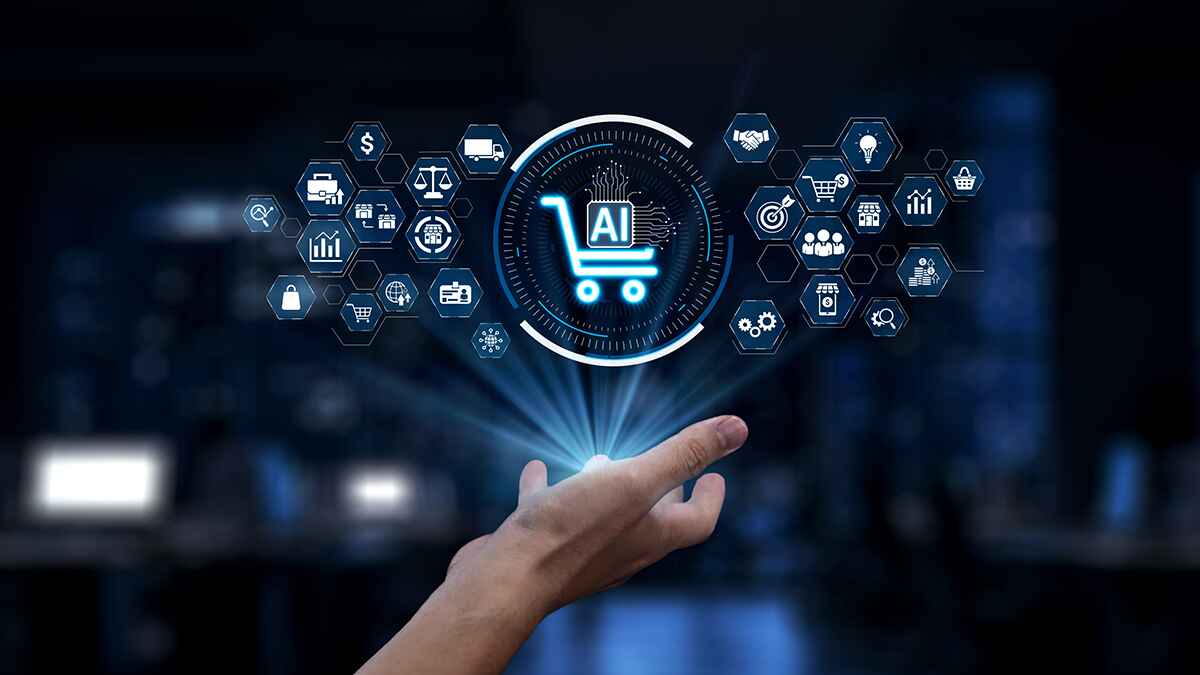
How Apexon Implements Agentic Commerce
Commerce shifts from a collection of siloed platforms to a unified, AI-native revenue ecosystem.
Powered by Apexon AgentRiseTM and Apexon’s ACP/AP2 commerce orchestration frameworks, we connect customer identity, product data, inventory, payments, loyalty, and fulfillment into a single real-time orchestration layer. AI Shopper Agents interpret buyer intent, build carts, apply optimal promotions, and guide customers to conversion. CartContinuityTM maintains persistent cart state across every device and channel transition. Pre-built DataUnifyTM connectors reduce ERP integration timelines by 50-70%. Organizations move from reactive platform management to proactive, agent-driven commerce with full auditability and governance.
Future State: AI-Powered Agentic Commerce Ecosystem
- Cart and identity persist across every device, channel, and session with persistent cart continuity
- AI Shopper Agent guides customers from intent through checkout regardless of starting touchpoint
- Promotions, pricing, and offers are consistent and synchronized across web, mobile, in-store, and voice
- Post-purchase loyalty, returns, and re-engagement orchestrated automatically within one platform
- BOPIS, same-day delivery, curbside pickup, and direct-to-home enabled with unified inventory visibility
- Fulfillment channel selected in real time based on availability, cost, and customer preference
- Order management, returns, and exchanges handled within a single orchestration layer across all channels
- Carrier and fulfillment node selection optimized automatically for every order at point of checkout
- Composable architecture enables rapid deployment of new channels, markets, and experiences
- Pre-built ERP and platform connectors reduce integration effort by 50–70% versus custom development
- Agent-driven operations reduce manual intervention in pricing, promotions, and inventory allocation
- Performance analytics and AI-powered optimization recommendations continuously improve conversion

A single source of truth connecting customer identity, product, inventory, and operational data across commerce, ERP, OMS, payments, and loyalty—enabling real-time agent-driven orchestration at every touchpoint.

Interprets buyer intent into specific products, builds carts, applies optimal promotions, and guides customers to conversion—across web, mobile, in-store, and voice channels simultaneously.

Maintains persistent shopping cart state across every device and touchpoint transition including agent-mediated sessions—ensuring cart continuity when customers move between mobile, web, and in-store.

Headless storefronts with AgentRise™ integration and pre-built ERP connectors reducing integration timelines by 50–70%—enabling rapid experience updates without backend deployment cycles.

Apexon ACP/AP2-compliant payment orchestration with secure authorization mandates, PCI/KYC compliance hooks, and idempotent transaction processing ensuring governance at every agent-driven checkout.
- Agentic Commerce Maturity Assessment
- Commerce Data & Identity Architecture Blueprint
- AgentRise™ Commerce Pilot with 3 Agent Capabilities
- Full Omnichannel Scale & Platform Integration
FAQ’s – Agentic Commerce
Agentic commerce is a commerce model where AI agents can discover products, evaluate options, compare alternatives, and complete purchases on behalf of users. These agents use large language models (LLMs), enterprise data, APIs, and automation workflows to understand user intent, identify suitable products, and execute transactions while following business rules and customer preferences.
Agentic commerce architecture is the technology framework that enables AI agents to perform commerce-related tasks. It typically includes large language models, agent orchestration layers, product information systems, enterprise APIs, commerce platforms, customer data, and governance controls that allow agents to discover, evaluate, and purchase products autonomously.
A typical agentic commerce architecture includes AI agents, LLMs, product catalogs, customer data platforms, commerce engines, APIs, payment systems, workflow orchestration tools, and governance frameworks. Together, these components enable autonomous product discovery, decision-making, and transaction execution.
Architecture determines how effectively AI agents can access data, make decisions, and execute transactions. A well-designed architecture improves scalability, security, compliance, personalization, and interoperability across enterprise systems while maintaining governance and human oversight.
Traditional ecommerce requires customers to manually browse products, compare options, and complete purchases. Agentic commerce allows AI agents to perform these tasks autonomously based on user intent, preferences, budgets, and business constraints, reducing friction throughout the buying journey.
Agentic commerce reduces the effort required to research and purchase products. AI agents can proactively identify relevant products, compare alternatives, and recommend optimal choices based on customer goals, creating a faster and more personalized purchasing experience.
Agentic commerce is expected to complement rather than replace traditional ecommerce platforms. Businesses will continue to support websites and mobile apps while also enabling AI agents to access products, services, and transactions through APIs and machine-readable commerce infrastructure.
Conversational commerce helps customers interact with businesses through chatbots, messaging platforms, voice assistants, and conversational interfaces, while the customer remains the primary decision-maker. Agentic commerce enables autonomous AI agents to make decisions and execute tasks on behalf of users. The two approaches can work together, with conversational interfaces capturing user intent and agentic AI systems handling product discovery, comparison, and transaction execution.